IELTS Exam: Learn the tips to improve IELTS Grammatical Range and Accuracy

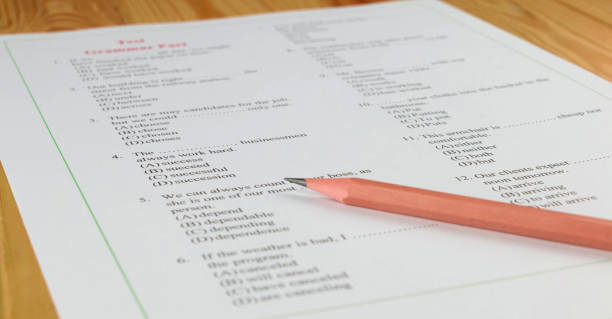
Knowing the importance of Grammatical range and Accuracy in IELTS exam is essential.

Let us start with understanding how they can affect your overall score in the IELTS Exam.

Knowing the basics and exact knowledge of Grammar is essential for all the four sections of the IELTS exam—Reading, Writing, Speaking and Listening.

In the IELTS writing task, along with coherence & cohesion, and lexical resource; your grammatical range and accuracy skills are also tested. And it constitutes almost one-fourth of your score in the IELTS Writing task 1 & task 2.

In IELTS speaking module, apart from being fluent in English, this module requires your fluency & coherence, lexical resource and grammatical range & accuracy skills to be at par to score well in the IELTS exam. In this module, your grammar skills will help you express your ideas clearly; and it also makes up a good score in this module.

Whereas, the IELTS Listening & Reading module need your grammatical skills to be useful to help you select the correct answers.

By now, you will have become more aware of the importance of Grammar.

But did you know that if you can master the skill of forming induces grammatical range and accuracy?

To do so, let’s begin with the basics of sentences formation:-

Sentences and their formations:

Types of sentences

There are four types of sentences: simple, compound and complex, Compound-Complex sentences

Simple Sentences

Sentences have a wide range of structures which have a clause as a part of the sentence or the sentence itself.

Clauses are of two types: dependent and independent. Dependent clauses are those who support a sentence, and Independent clause are those that help to complete a sentence.

The simple sentence is the combination of a subject and verb.

Simple sentence = Subject+ Verb

For example,

It is raining.

He is a boy.

Compound sentences

These sentences are a combination of simple sentences connected by a conjunction. They have multiple coordinate clauses that combine two different sentences.

The coordinating conjunction is abbreviated as ‘FANBOYS’ (For, And, Nor, But, Or, Yet, So).

For example:

She completed her house chores, and she also attended the wedding.

(The conjunction and connects two similar ideas here

Complex Sentences

Complex sentences are made of independent clause joined by one or more dependent clauses. A Dependent clause is an incomplete thought it might either lack a subject or a verb or has both a subject and no verb. The dependent clause can be in the starting, middle or end of the sentence.

For example:

After completing his work at the office, tom went to the party directly.

(If you say “after completing his work at the office,” is an incomplete thought that is dependent on the independent clause. The independent clause is ‘Tom went to the party directly’).

Compound-Complex sentences

These sentences often have two independent clauses and one dependent clause minimum.

For example:

After John and Mark finished their work at the office; they joined their colleagues, and they went to the movies.

(Dependent complex is “After John and Mark finished their work at the office”)

Conclusion

Grammatical range and accuracy in the IELTS Exam assess the proper and broader usage of complex sentences. It is not enough that you have your grammar correct, it is also important to have variety in it.

And knowing these basics will surely help you form proper sentence structures and hence improve your grammatical Range and Accuracy.

Note: Knowing where to use the dependent clause and independent clauses will help you for complex sentences.

Studying in abroad is a dream for many students. IELTS and TOEFL will pull you closer to your dream of studying in a foreign university. IELTS Kurali is one of the best IELTS Coaching institutes, and suit to your pocket. For more information please drop comments in the comment section.


How to become good in IELTS speaking task 2?

IELTS speaking task 2 is often believed to be one of the daunting parts of the whole exam. It could seem this way because here, you are allowed to speak independently for a comparatively longer time, without any prompts from the examiner. Here you will be asked to speak about something you’ve had an experience with: it could be about a person you like, or a book you read or a place you visited. You will be given a cue-card with the topic and a few ideas on how to address it. You can have a minute to improvise (here you are allowed to jot down your points) and 1-2 minutes to speak about it. The examiners will not ask any question while you speak but once you finish, they will ask you questions related to the topic you spoke about.

What does it check?

In the IELTS speaking test 2, you are expected to deliver a monologue. The examiners will mark you on your fluency and coherence, lexical resource, grammatical range and accuracy, and pronunciation. However, this does not mean you can score well with a British or American accent. You need to be confident, have your ideas ready and speak very clearly.

The areas you should focus on to get better

IELTS Speaking task 2 can be conquered with ease, if you prepare yourself, keeping the following things in mind:

Have a strategy

Strategic planning is the key to success, in nearly every exam. Before starting to speak, you must have a clear idea of what points you are going to speak about. It is a good idea to begin with a brief introduction, followed by a short description and then go on to talk about its past and your opinion about it and then finish off with your future plans with it.

Manage your time well

The IELTS Speaking task 2 is done in 3-4 minutes, including the 1 minute preparation time. It is important that you utilize each second of this brief but crucial test. You must make the best use of the 1 minute to make points of what you are going to deliver and then spend no more than 30 seconds to elaborate on each point. Make sure not to rattle away but speak clearly and at a consistent speed.

Expand your ideas

Whether you write or speak, it is necessary to expand your ideas. You will have to break down your ideas and critically analyze each component to see if it is relevant. It is unwise to take your ideas for their face-value. A thorough inspection of your ideas will automatically help you skim the unnecessary elements.

Prepare well

Speaking about a topic in 3-4minutes in fluent, error-free English can seem challenging. Therefore, preparing for your Speaking task2 requires a strategic approach. Coaching from an expert IELTS mentor can help you achieve your desired result without making it look complicated. A mentor can understand your difficulties and provide guidance accordingly. In fact, most of the students who cleared IELTS at one go invested on a good mentor. Preparing for an exam may be an entirely personal thing, but the quality of preparation depends wholly on the kind of guidance you are receiving.

Conclusion

A good score in IELTS speaking task 2 is just the tip of an iceberg. Plenty of hard work, quality guidance and expertise in time-management go behind that perfect score. If you aim for the best, you must be prepared to focus on the details and invest in a good personal mentor. ASIC provides Best PTE, IETLS and TOEFL coaching kurali.

Canada Immigration Through Express Entry

What is the process of immigrating to Canada?

Canada is one of the popular countries that Indians prefer to immigrate to. Compared to U.K and U.S, getting a permanent residency in Canada is much easier. After you decide to immigrate to Canada, the first things you must know are the process, cost and how much time does it take.

The first step is, to find out which category suits you the best for application. There are three categories: FSW, CEC, and FST.

-FSW or Federal Skilled Worker is anyone whose work is based on their academic degree. For example: doctors, engineers, teachers, accountants, managers and so on.

-CEC or Canadian Experience Class is for those individuals, who already have work experience in Canada.

-FST or Federal Skilled Trades is applicable to anyone who specialised in a particular skill and doesn’t belong to the above categories. For example: designers, chefs, welders, electricians etc.

Once you have decided on your category, the next step is to choose a mode. Canada Immigration offers two modes: Express Entry and PNP or Provincial Nominee Programme. Between these two, Express Entry is the best choice because it allows you to settle anywhere in Canada, whereas PNP only allows you to settle in a particular province.

How Does Express Entry Work?

Immigration procedure through Express entry has few easy steps. First you have to create a profile on the IRCC (Immigration, Refugee, Citizenship, Canada) website. They will ask you basic questions like your age and education and will ask two documents: your IELTS Score card and your ECA(Educational Credential Assessment) certificate.

How to get the ECA and IELTS score?

In order to get your ECA you will have to submit copies of all your degrees to an agency.  www.wes. org is the oldest and the most popular one. They will evaluate your credentials and give a report that identifies and describes your credentials, verifies that your credentials are authentic, and includes an evaluation of the authenticity of your documents. It may also include a grade point average (GPA) equivalency.

To get an IELTS score card, you need to prepare for the IELTS exam with a good personal mentor. Then register with British Council, pick a date and exam centre and take the IELTS test. Once it is done and your performance is evaluated, you will receive your IELTS score card.

Express Entry Pool, CRS score and ITA.

Your profile on IRCC will be complete only after you upload your ECA and IELTS score card. This complete profile then enters the Express Entry pool. Once your profile is in the pool you will get your CRS (Comprehensive Ranking System) score. If your CRS score is above the cut-off (440-470), then you receive an invitation to apply or the ITA. After receiving ITA you will have to submit all your documents (medical certificates, police verification certificate, financial proof etc.) within 60 days. This is when your Visa Application procedure begins. In about 6 months you can expect to receive a call from the Visa office.

How much time does it take to complete the formalities?

The entire procedure takes about one year to complete.

*Creating profile- Takes no more than an hour.

*Taking IELTS- You need at least 2-3 months preparation to achieve an 8777 score in IELTS. After that you take the exam and get your score card in 13 days.

*Getting ECA- ECA also takes about 2-3 months. You can prepare for IELTS and apply for ECA simultaneously.

*Getting ITA- Depending on your CRS score, getting ITA can take from 16 days to three months. Canada Immigration conducts two draws every month to select candidates for ITA. If your score is above the minimum requirement you can make the cut in the first draw after your application.

*Post-ITA- It takes about 60days to submit your documents and complete the process.

*Visa- Once the documents are submitted, your visa will be ready in 6months.

How much does it cost?

The first thing that will cost you in the Express Entry process is the charge for getting ECA.

Next is the IELTS. The exam fee is 13250INR which is about 15000 INR, if you include travel. IELTS Coaching for getting an 8777 takes about 30,000INR. So a total of 45-50000INR is needed for IELTS.

Post ITA, the Final Application costs 1140CAD (60,007 INR).

Conclusion

Immigration to Canada through Express Entry is by far, the easiest way. It costs a total of 121945 INR for a single person to complete the procedure. If your documents and credentials are ready then in one year you can see yourself flying off to Canada as a permanent resident. You might have hesitation in taking up the right institute for French language coaching. French Institute Kurali will provide a free demo before you start.

How do I get an 8.0 band in the IELTS?

IELTS 8 band is all about planning and great execution of the plan. The following plan can be a good start if you are aiming at Band 8.

Mark out dedicated 2 hours every day.

Since IELTS is an exam that judges your skill, no amount of last moment marathon sessions can help you score Band 8. Consistency is the key to a good score in IELTS.

 Master your reading first (10days)

It is good to start with reading because nowadays a maximum number of students lacks the habit of reading. Reading every day can boost your listening, speaking and writing skills. You will also get an exposure to the genres that IELTS focus on. Reading will naturally enrich your vocabulary and give you enough foods for your thoughts.

Give maximum time to writing (15 days minimum)

Writing is perhaps the most challenging of all the sections in IELTS. It is quite difficult to get more than 7 in IELTS writing. The key to success in writing is developing a cyclic process: writing-getting feedback-and improving. You are judged on your grammatical range, vocabulary, ideation, and clarity; these skills need to be developed and only by proper feedback and adequate practice, can you hone these skills.

Get a Trainer for Speaking practice and essay evaluation

As mentioned earlier, IELTS is all about testing your skills. Practicing alone will not take you anywhere. A personal trainer will provide you with proper feedback in every step so that you can work on your drawbacks. Speaking, like writing needs constant attention because otherwise, you will continue doing the same mistake over and over. It must be remembered that unlike Maths or Science, there is no one correct answer in Speaking and Writing. It is all about how skilfully you perform the tasks. That is why your practice should be constantly monitored by a trainer.

Practice is important but not the end of it; IELTS is a skill exam, not a math exam

Practice does make a man perfect. However, in IELTS practice does not mean repetition. You must evolve in your language skills to get that Band 8. You cannot achieve Band 8 by mindlessly practicing past papers. Your practices must be thoroughly monitored and at each difficulty, you must stop and fix it. Preparing to get Band 8.0 in IELTS is a continuous process until you reach the level, where your language skills are absolutely impeccable.

Conclusion

Getting a Band 8 in IELTS is all about reaching perfection in listening, reading, speaking and writing. A feat, that can only be achieved by dedicating a good amount of time in identifying your linguistic weaknesses and working hard to overcome those. It is important to engage a personal mentor, who can supply you with quality resources and create a support program, according to your needs. You can join TOEFL Training Kurali to get free tips and facts on the English Language.

IELTS Reading: Study Guide, Information & Tips

IELTS Reading test is all about variety. You will find a myriad of questions assessing different skills. Now, you must be thinking about how to prepare for an exam, that is so greatly variegated. Fear not. We are here with everything you need to know about the IELTS Reading test.

IELTS Reading Format

The Reading section consists of 40 questions, designed to test a wide range of reading skills. These include reading for gist, reading for main ideas, reading for detail, skimming, understanding logical argument and recognising writers’ opinions, attitudes and purpose.

You will find extracts from books, magazines, newspapers, notices, advertisements, company handbooks and guidelines. These are materials you are likely to encounter on a daily basis in an English-speaking environment.

There are three sections:

  • Section 1 may contain two or three short texts or several shorter texts. This is called ‘social survival’ and contains texts relevant to basic linguistic survival in English with tasks mainly about retrieving and providing general factual information, for example, notices, advertisements and timetables.
  • Section 2 comprises two texts and is about ‘Workplace survival’. This focuses on the workplace context, for example, job descriptions, contracts and staff development and training materials.
  • In Section 3, there is one long text. This is the ‘general reading’ section that involves reading more extended prose with a more complex structure. Here, the emphasis is on descriptive and instructive rather than argumentative texts, in a general context relevant to the wide range of test takers involved, for example, newspapers, magazines and fictional and non-fictional book extracts.

Common Mistakes to Avoid

When you are learning, it is natural that you will be committing mistakes. But it is necessary that you work on your mistakes so that they are never repeated. By “mistakes” we do not only mean spelling or grammar error, there are also methods and tactics which are wrong and you must remember to avoid them. Let us have a look at the mistakes you must avoid:

1. Reading the entire passage

The IELTS reading test consists of three passages of approximately 500-700 words and 13-14 questions each, all in a span of 60 minutes! Now, if you were to read each of these passages, word for word, you’d spend nearly 30 minutes. So how much time are you left with to answer 40 questions in all? Do the math.

Therefore it is better to skim through the passage. Here’s how to do that: 

  • Read the title and the first paragraph. 
  • Then, start reading the first sentence of subsequent paragraphs to understand.
  • Finally read the last two sentences of the concluding paragraph of the passage. 

This should give you an idea of what is being spoken about, in the entire passage, without you having to actually read it!

2. Starting with the questions

Some students, in order to save time, start answering questions directly. Well, this is as bad as reading the entire passage. Of course you might save time, but, quite possibly your answers could be wrong! Especially answers to questions like the ones shown below.

3. Ignoring the instructions

If the question reads: “Choose NO MORE THAN TWO WORDS”, you would rather do just that. Any more than two words and you defeat the very purpose of the question which is to test your vocabulary and paraphrasing ability.

4. Not being familiar with the question types

If you’re not familiar with the types of questions asked in the reading test of IELTS, you might spend a few valuable minutes of your test duration, just to understand them well. If you wish to save those minutes, you must go through the practice papers available online.

5. Not managing time

Completing your reading test within 60 minutes is fairly difficult. If you do not manage your time well, you make it simply impossible. Answer the questions that require less brainstorming before the complex ones. Eliminate options from multiple choice questions before you actually search for the answer. For example: A question about the sun, has options like “Hot”, “Blue”, “Cold”, and “Yellow”; you know the sun is neither “Blue”, nor “Cold”. The answer could be either “Hot” or “Yellow” based on the information provided.

Challenging Question Types:

IELTS reading section comprises of eleven types of questions. Each of them, assess a particular skill set. While some questions are fairly straight forward, others may seem rather challenging. We think the following types of questions require special attention while you prepare:

  • Identifying Writer’s Claims/Views

       These check your ability to identify the ideas and opinions of the writer

  • Matching Information.

        Questions like these are used to see how well you can scan a text to find specific information.

  • Matching Headings.

These check how skilfully you can recognise the main idea or theme of a particular paragraph.

  • Matching Features.

       These assess your ability to determine relationships and connections between facts.

  • Sentence Completion.

Here you are assessed for your ability to locate specific information from the passage and the ability to paraphrase.

  • Summary, Note, Table, Flowchart Completion

 This type of question checks your ability to identify the main idea of the passage and the type of words that fits into the gap.

  • Diagram Label Completion

They check your skill to relate the information in the text to the labels in the diagram

  • Short-Answer Questions

This type of questions assesses how well you understand and locate the information given in the passage.

Study Guide for IELTS Reading

It must be evident by now that IELTS is a very detailed and technical system. Therefore in order to achieve a good score you must have a proper study plan. Look at ours to have an idea:

1. Know your weaknesses

It will be impossible for you to progress if you do not know what your weaknesses are, in the first place. Take help from a personal mentor who can give you regular feedback son your progress.

2. Practice reading fast.

Remember it is a 60 minutes test and you have to read the text and answer 40 questions. If you are a slow reader, speed up. 

3. Develop the skills of each type of question.

Eleven types of questions assess eleven types of skills. While you practice make sure you develop all the skills that are necessary to answer those questions.

4. Focus on developing your vocabulary.

In many ways, the reading test is more of a vocabulary test than a reading test. They will use synonyms and paraphrase sentences to test how wide your vocabulary is. To prepare for this you must read, note, and review.

5. Develop a reading routine. 

Reading routine is a technique where you read in moderation, about 2000 words every day. Time them and make a 30 days Reading plan. 

6. Comprehension is as important as speed.

When you read articles as part of daily reading, write or narrate a summary of the article with your study partner. Evaluate whether you are comprehend the information correctly.

7. Read relevant articles for practice, not everything you get your hand at.

You must take relevant articles from TOEFL Institute Kurali. Reading Indian newspapers or a random book won’t help.

Advantage Disadvantage Essay Topics

The advantage -disadvantage type essay is a very common type in the IELTS writing task 2. It involves a situation that you are asked to comment on, emphasising the advantages and the disadvantages.

We are here with some common topics on this category of essay questions.

Topics for Advantage-Disadvantage Essay

The topics on this area are widely varied. As it is a kind of an analytical essay, it can be understood that social issues are the most common for topics. Here is a rough list:

Advertisement: Advantages and disadvantages of celebrity endorsements, graphic advertisements, foreign products, etc.

Transportation: Advantages and disadvantages of public transports, various aspects of commuting etc.

Tourism: Advantages and disadvantages of development of tourism industry, travel agencies etc.

Education: Advantages and disadvantages of public schools, any particular curriculum, vocational courses etc.

Economy: Advantages and disadvantages of different taxes, government expenditure etc.

Business: Advantages and disadvantages of e commerce, recruitment from within a company etc.

Food/Health: Advantages and disadvantages of growing fast food joints, veganism etc.

Social Media: Advantages and disadvantages of social media, online news etc.

Family/Parenting: Advantages and disadvantages of joint family, nuclear family, religious upbringing etc.

Sample Questions

Let us now see what the advantage-disadvantage essay questions look like:

  • Small businesses are disappearing and being replaced by large multinational companies.

Do the advantages of this outweigh the disadvantages?

  • Many products that we buy are made in other countries.

Discuss the advantages and disadvantages of this and give your own opinion.

  • Increasing numbers of students are going to university instead of working after high school.

Discuss the advantages and disadvantages for young people who do this.

  • School children are using computers in school more than ever.

Discuss the advantages and disadvantages of this and give your own opinion.

  • As countries become more developed, many fast food outlets move into the country giving local people greater access to fast food..

Do the advantages of this outweigh the disadvantages?

  • Many businesses choose to recruit from within their own company rather that sourcing staff from overseas.

Do the advantages of this outweigh the disadvantages?

  • With the advent of social media, more people are getting their news online instead of from print media.

Discuss the advantages and disadvantages for people who read news online.

Model Answers

  1. Nowadays, more people would rather purchase food than cook at home. What are the advantages and disadvantages of this trend? 

Give ideas about which is better way according to you and why?

Due to the busy lifestyle, people are consuming more of the processed food in spite of cooking food for themselves. There could be several merits and demerits of this uprising trend. In my opinion, homemade food is far more beneficial as compared to the readymade food.

To commence with the benefits, packaged products such as pasta, noodles, etcetera are easily available in the market. They are instant food products and just need boiling or reheating which in turn save our time. Also, people get so tired after their hectic routine that they lack the energy to prepare meals. Therefore, they find useful to buy readymade food products. In addition, this type of processed foods is easy to carry everywhere, even while travelling. In fact, due to additives and taste enhancers, individuals, especially children, love their taste and their salivary buds are stimulated by these sort of meals.

Despite these benefits, there are ample drawbacks. Firstly, these products are processed and lack their natural nutrition. What is more, many preservatives are added to increase their shelf life which has several health hazards to consumers. For example, sodium benzoate is one of the popular compound used for preservation of packed foods which occasionally can be life-threatening. Secondly, although they are vacuum packed, they can get contaminated by various microbes and cause an abdominal disturbance sometimes causing other lethal diseases like food poisoning, botulinum and many more. Additionally, these products can also be expensive for the consumers to afford.

To recapitulate, I believe that the use of readymade foods has a plethora of detrimental effects and home-cooked food can provide plenty of nutrients to stay healthy and develop immunity.

  1. In some countries young people are encouraged to work or travel for a year between finishing high school and starting university studies.

Discuss the advantages and disadvantages for young people who decided to do this.

Before embarking on college many young people are advised that a year working or travelling may be a good option. This essay will suggest that saving money is the biggest advantage of this and a reduced motivation to study is the primary disadvantage.

Third level education is very expensive and lots of students decide to work for 12 months and save up money before they begin their studies. This allows them to pay for their living costs, tuition fees and accommodation and focus on their studies, rather than struggle financially or have to get a part time job on top of their academic work. The Times recently reported that the average student at a UK university requires over $12,000 per annum just to survive and many drop out because they cannot afford to stay.

Despite these advantages, many students often get used to working or travelling and don’t want to return to a life of study after a year off. This short term view can cause some to bypass university altogether and go straight into a job that is beneath their capabilities or may not offer the same prospects their future career might have done. For instance, a recent survey by the British Government found that 26% of students who take a gap-year never enter tertiary education.

In conclusion, taking a break from studies can be advantageous if it allows people to gather up savings, however, they should also be careful that it does not lead to disillusionment with education altogether.

Conclusion

Topics of the advantage disadvantage type essay questions are usually social issues that have both positive and negative sides. You will be clearly asked to point out the both sides of a particular issue. This type of question is very straightforward and requires an organised preparation to achieve a high score. IELTS Coaching Kurali provides you with the Immense IELTS Test series, which is definitely worth Enough.

Advantage Disadvantage Essay: Tips and Strategies for IELTS

IELTS writing task 2 consists of a wide variety of essays. While you are preparing, it is important that you familiarise yourself with the different types and understand how to approach them. One of the most popular choices of the IELTS examiners is the advantage-disadvantage essay. 

For this you are given a topic and asked to discuss its advantages and disadvantages. Although it is a fairly straightforward essay, you still need to have a proper understanding of how to structure this kind of essays. Let us look at this in details.

Skills tested in IELTS Writing Task 2

This task is about assessing your ability to follow English discursive writing conventions (i.e. what order to put information in, what style to use, how to start and finish discursive writing, how to paragraph), to organise and link information coherently and cohesively and to use language accurately and appropriately. 

It requires you to formulate and develop a position in relation to a question or statement. Your ideas should be supported by evidence, and examples may be drawn from your own experience. The essay should be at least 250 words in length and the ones under the required minimum word limit will be penalised.

Strategies for Advantage-Disadvantage Essays

The first strategy to write a Band 9 advantage-disadvantage essay is to know what the question asks of you. When you have this type of essay it is important to distinguish between the one that asks for your opinion and one that asks you to discuss advantages and disadvantages but does not ask your opinion.

If you are asked “What are the advantages and disadvantages of…..” you are not being asked your opinion. You simply have to discuss the benefits and drawbacks.

You could do this in two body paragraphs as mentioned above. However, if you have the word “outweigh” or “Will this trend have more positive or negative effects?” then you are being asked for your opinion and you must say whether there mostly positive impact or mostly negative impact.

  • The following structure illustrates how you should structure the essay that specifically asked you to write about the advantage and disadvantage of a particular situation. For Example:

People now have the freedom to work and live anywhere in the world due to the development of communication technology and transportation. What are the advantages and disadvantages of this trend?

This advantage disadvantage essay is not asking for your opinion. You could simply write one paragraph on the advantages and another on the disadvantages.

Introduction

Sentence 1- Paraphrase question

Sentence 2- Outline sentence

Main Body Paragraph 1 (Advantages)

Sentence 3- Topic sentence (Advantage 1)

Sentence 4- Explain how this is an advantage

Sentence 5- Example

Main Body Paragraph 2 (Disadvantages)

Sentence 6- Topic sentence (Disadvantage 1)

Sentence 7- Explain how this is a disadvantage

Sentence 8- Example

Conclusion

Sentence 9- Summary of main points

  • On the other hand, the following question asks about what your opinion is:

People now have the freedom to work and live anywhere in the world due to the development of communication technology and transportation. Do the advantages of this development outweigh the disadvantages?

OR

Will this have more positive or negative impacts?

For this kind of questions, the structure will be as follows:

Introduction

Sentence 1- Paraphrase question

Sentence 2- Thesis statement (state which one outweighs the other)

Sentence 3- Outline sentence

Main Body Paragraph 1 (Stronger Side)

Sentence 4- Topic Sentence

Sentence 5- Explain why it is strong

Sentence 6- Example

Sentence 7- Topic Sentence

Sentence 8- Explain why it is strong

Sentence 9- Example

Main Body Paragraph 2 (Weaker Side)

Sentence 10- Topic Sentence

Sentence 11- Explain why it is not strong

Sentence 12- Example

Conclusion

Sentence 13- Summary of main points and restate position.

Additionally, it will also help if you look at several past papers and try to determine the language that are used to ask a particular type of question.

Understanding the question and having a proper structure for your essay, along with a range of contextual vocabulary is all that you need to achieve a high band.

Tips for Advantage-Disadvantage Essays

Here are some practical tips that will help you consolidating your ideas:

  • Before you start writing your essay, you should always spend 1-2 minutes on producing ideas for your answer. This way, you’ll know what to write about and your answer will be more coherent and well-structured. 
  • In case of advantages & disadvantages essay, you need to think of 2-3 advantages and 2-3 disadvantages of the given issue.
  • In case of the essays asking for your opinion, you must decide what you think, before starting to write your essay.
  • Always time yourself while you practice.
  • Remember you will have to write slightly more than 250 words, so make sure you keep a tab of the word count.
  • Familiarise yourself with vocabulary that is particular to a specific topic.

Conclusion

The most important thing about an advantage-disadvantage type essay is, understanding the question; Whether you are asked to write about your own opinion or just point out the established advantages and disadvantages. If you figure this out all that is left for you to do is, arrange your points in a proper structure and use a range of grammatical structures and relevant vocabulary to establish your point. ASIC provides best PTE Training Kurali, if you have any query please contact us.

Design a site like this with WordPress.com
Get started